Posted on

Athlete Development: accommodating the growing body

Athlete development

One of the most integral topics to talk about on a regular basis and is so often overlooked but is equally so frequently associated with a player’s and/or athlete’s rate of injury and its subsequent onset. As one of those player’s whose career was sidelined by the onslaught of injury after injury, I know first hand of its pain — internally and externally, whilst also am mindful how infrequent training modifications are made throughout this phase of growth.

The lack of education around keeping an athlete or player healthy as a whole is incredibly broad.

To ensure your child is safeguarded from developing an otherwise preventable injury, make sure their coach is making the right modifications. For the players and athlete, be sure to have these conversations on a rolling basis of how your body is feeling. There is a good chance if you need more time off that your training load is too high and not in accordance with your rate of development and/or progress. For coaches who want to know more on how to safeguard their player, then listen in and get your hands on The Complete Collection.

We now know of the direct and subtle indirect associations with injury to athlete development and how frequently this is ignored. More often than not, this is the case and why we see players/athletes leave their sport of choice preemptively — without their professional dreams coming to life. There is a way and there is also a way to make sure these dreams stay alive with the correct modifications (yes, there’s that word again) and load in alignment with their rate of progress that is directly correlated with their development. Be sure not to mistake age for an indicator when each player and/or athlete is unique and at different stages of development throughout their playing levels — not to be associated with their actual age!

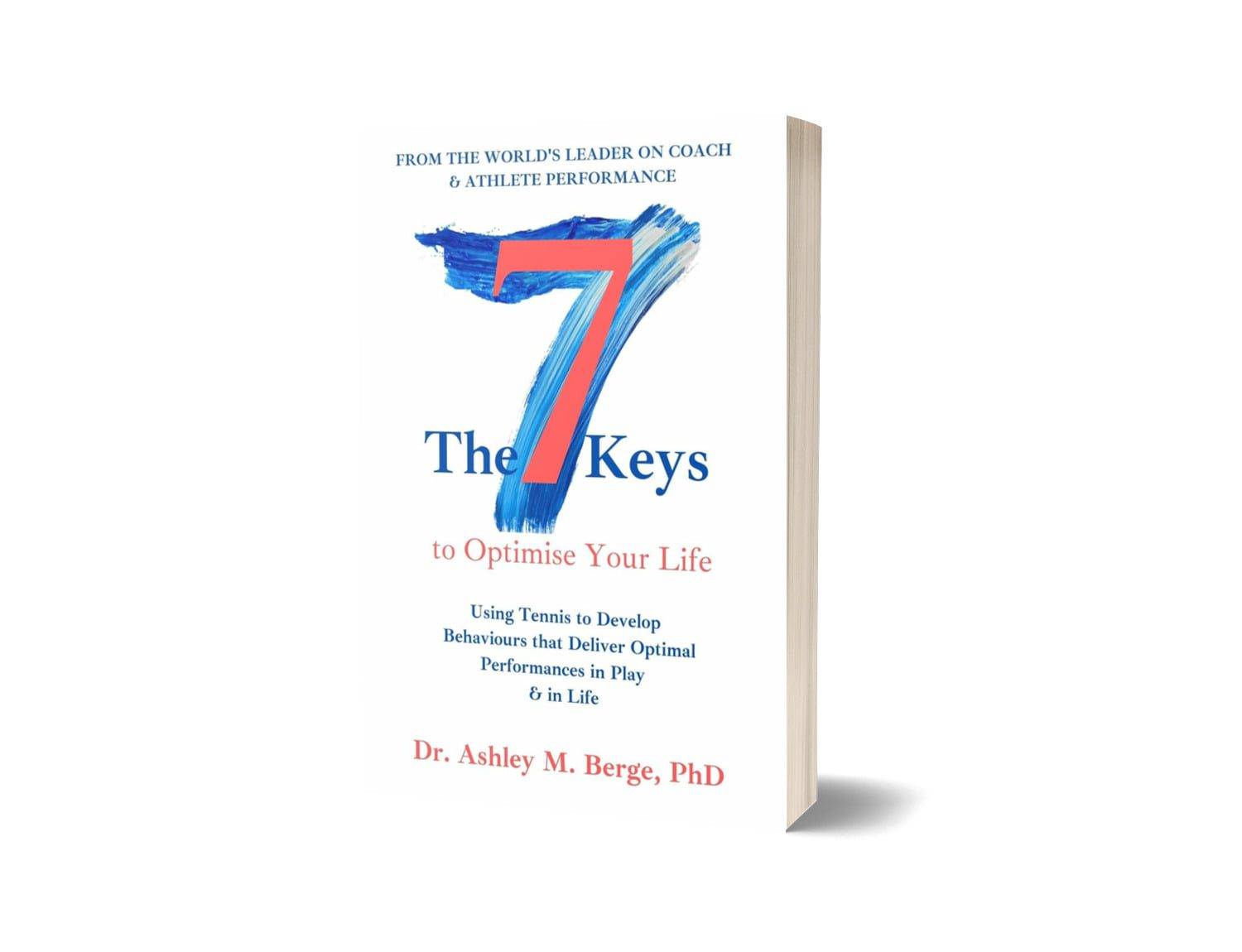
To learn more about our data, predictive analytics and how to optimise your own performance, head on over to AM8 International. To learn more about AM8 International check out our selection of Books and/or options to join Dr B’s Pack to gain exclusive access to the best in the world. Not quite ready? Head on over to Beyond Top 10 Tennis for free access to 100+ episodes directly from Dr Berge of what it really takes to win multiple Grand Slams to securing that Top 10 tennis ranking with new episodes each week. More? Catch up on our Tips over on TikTokTwitterThreads or Instagram for quick snippets to apply in your game, today. 
Posted on

Motivation: of the right kind for athletes

motivation for athletes

Motivation is a near buzz word that sets off alarm bells on the ‘right’ way and how to progress forwards. I recall as a teenager my Mum telling me that I needed “the eye of the tiger” to get my results to improve. Similarly, the times my own Dad came to motivate me — but succeeded in embarrassing me completely. The thing is, it was never a topic of discussion nor shared. It is no surprise then that for myself personally, these ‘motivators’ were not mine nor did they reflect my own intrinsic beliefs to behaviours. It is so integral to remember that each player to athlete alike are different and to find out what works best for them.

Over the years I’ve worked with players who respond to a simple glance and that’s all they need. Others, the constant clapping and cheering. And then there’s the more explicit feedback and crafting. Each player is unique as they are human and this week’s episode reminds us all that we’re all human and individuals. Athletes to players is only one side of the individual and it needs to be accounted and cared for.

In order to find what works best for you, ask yourself those key questions from what excites you to more simply, why do you player the sport/game and what’s your end goal. What encourages you to is a positive motivator? What settles your nerves to ignites your game? These are simple conversation starts for players and parents and/or guardians to have, same goes for the athlete and the coach.

The biggest takeaway is that if it’s not working, it’s not your fault.

If it works, keep doing it if it feels good and you respond just as good. If it doesn’t then don’t be afraid to speak up and rework those intrinsic to external motivators and make sure you’re having a blast whilst doing so!

To learn more about our data, predictive analytics and how to optimise your own performance, head on over to AM8 International. To learn more about AM8 International check out our selection of Books and/or options to join Dr B’s Pack to gain exclusive access to the best in the world. Not quite ready? Head on over to Beyond Top 10 Tennis for free access to 100+ episodes directly from Dr Berge of what it really takes to win multiple Grand Slams to securing that Top 10 tennis ranking with new episodes each week. More? Catch up on our Tips over on TikTokTwitterThreads or Instagram for quick snippets to apply in your game, today. 
Posted on

How to Avoid Adolescent Injuries: coach responsibilities

how to avoid adolescent injuries

As a former player that experienced injuries from an early age, it was near expected that it was a part of the game and even worse — you must have been training too hard and it was near commendable that you had a injury to show for it. For lack of better words, you were hardcore! And if that was anything to go by, I was pretty darn outright hardcore throughout my playing career which was cut short from ongoing injuries.

Too often it is mistaken that it is the players and/or athletes fault for getting injured but this is incredibly far from the truth. A player/athlete decides to ‘train’ and/or ‘practice’ in the sport they enjoy because they want to get better. The coach is responsible for ‘teaching’ the player/athlete how to play and use the right skills to techniques. Now, to be fair if a coach is not present and a player/athlete performs an alternate skill and/or technique other than what has been taught, that’s another ballgame. But if in fact the player/athlete is doing what they’ve been taught, this is where the problems are based.

Coaches need to monitor their players/athletes and be mindful of potential injuries from occurring and/or developing.

This means if you’re in an academy setting, there needs to be enough coaches to players (ratio) to oversee correct skills and/or techniques are being applied, performed to conditioned. If this isn’t the case and a close eye is not kept, the greater the risk of developing an injury. However, you could also be ‘taught’ a technique that in fact has long term potential for an injury to occur. In tennis, a big trend is with the forehand groundstroke and lifting that elbow nice and high to above the shoulder before coming through to contact the ball. Now, as the world’s leading expert in the forehand groundstroke exclusively and most specifically, I can tell you now — that’s an injury waiting to happen. And it happens everywhere.

Take a listen to this week’s episode and share your thoughts. To keep ahead of injury management and/or to learn more about ensuring The Long Game stays on track, head on over to The Complete Collection to learn more.

To learn more about our data, predictive analytics and how to optimise your own performance, head on over to AM8 International. To learn more about AM8 International check out our selection of Books and/or options to join Dr B’s Pack to gain exclusive access to the best in the world. Not quite ready? Head on over to Beyond Top 10 Tennis for free access to 100+ episodes directly from Dr Berge of what it really takes to win multiple Grand Slams to securing that Top 10 tennis ranking with new episodes each week. More? Catch up on our Tips over on TikTokTwitterThreads or Instagram for quick snippets to apply in your game, today. 

Posted on

Jarring the Body in Sport: is my child getting injured?

Is my child getting injured playing tennis?

A player’s or athlete’s most dreaded word is injury. Likewise is the time needed away from training until the player/athlete is back to 100% health. Often this causes a loss in performance to fitness which winds the clock back to ‘start again’ through various phases of periodisation. If not following a peak performance pathway and/or program, an injury can still derail a player/athlete from simply being pushed to the sideline and can be debilitating in various ways form not being able to play the sport you enjoy the most, being involved to progressing towards set goals/objectives you’ve been working towards.

The good news is that steps can be put in place to mitigate the onset of injury. The bad news is that too often these are overlooked and players/athletes end up developing an injury and eventually, stop participating all together. Before this ‘worst case scenario’ happens, it comes down to learning more about your overall development — as the player/athlete, and also for your parents to equally understand and be informed of this management to key steps to put in place. Then it comes down to the coach and building a solid foundation and to also press the coach to ensure their pedagogic underpinnings support and are conscious of these pathways to programs and steps to put in place to safeguard the player/athlete and for the parents — your child and the hefty bills, at times, that come along with the rehabilitation process.

Being upfront that injuries can happen and being prepared to put the work in to prevent them, is a players/athletes greatest weapon.

But this also includes being aware that your foundations may need a shake up and you’ll need to put the work in off the court, field, pool or wherever your training is based, to condition your body for the long haul. And whilst some injuries cannot be prevented — whether that be an ankle roll or similar from an accident (they happen to the best of us!), we’re really talking about the ones that are debilitating in the sense of your technical foundations — shoulder, knee, hip, elbow to wrist and they all have something in common.

By learning how to better prepare and establish the ‘right’ foundations, you’re already ahead of ‘The Pack‘ and prepared for the years to come.

To learn more about our data, predictive analytics and how to optimise your own performance, head on over to AM8 International. To learn more about AM8 International check out our selection of Books and/or options to join Dr B’s Pack to gain exclusive access to the best in the world. Not quite ready? Head on over to Beyond Top 10 Tennis for free access to 100+ episodes directly from Dr Berge of what it really takes to win multiple Grand Slams to securing that Top 10 tennis ranking with new episodes each week. More? Catch up on our Tips over on TikTokTwitterThreads or Instagram for quick snippets to apply in your game, today. 
Posted on

Continued Learning: how do coaches continue to learn after they have become a coach?

Continued learning and how coaches learn

Oftentimes overlooked or misperceived, the scope of coach education is so much greater than common perceptions. Whilst coaching accreditations exist, it is seldom thought to dig a little deeper to see ‘how much’ you can get with the right partnership or coach-athlete relationship. On one hand, it may ‘just’ be the accreditation — if you’re coaching, this is your bare minimum standard. But this can be coupled with so much more, beginning with an undergraduate degree in a designated area to complement this learning dynamic. And if you’d like to get serious — a Masters will get you towards that next peak level. Although, if you’re really lucky, a PhD will kick that end goal depending on the field of specialisation (that’s a big one, not to be mistaken for a non-specific domain).

It is often mistaken that a Medical Doctor is a “doctor” and a PhD is an academic qualification opposed to “doctor”. The irony here is that in Australia it is often misperceived and mistaken. That is, those with the PhD are oftentimes the ones responsible for educating those doing their undergraduate ‘medical degree’. A PhD takes a minimum of 10 years of specialisation whilst a medical degree is that 3-4 year initial pathway and that is without a specialisation. Whilst these do most often happen later along the road, their 10 years is yet to be done. So next time you see that PhD, they are in fact not only the ‘doctor’ in their own right, but when it comes to knowledge and education — they’re the absolute POWERHOUSE. After all, they’re the ones researching to educating to finding new marvels of the world with rigorous scientific protocols followed to unleash a new contribution to the world, to our growing literature and push the world forward as the ‘frontiers’ of education that ‘other doctors’ are reliant upon. Whilst medical doctors work with the public to solve ailments to an assortment of health issues — oftentimes they work in teams and together…

…whereas a PhD is oftentimes the standing expert in their field, and for some, the global expert in their niche which can seldom be said to other ‘doctors’ worldwide.

Although that isn’t what this is about. This is about removing the misconception and setting is straight. There are certificates to accreditations, and then there is the next level — YEARS of education to get towards an undergraduate degree to begin opposed to weeks to months to maybe a year for these certifications or accreditations. So if you hold education in high esteem, continued learning is essential for building more robust frameworks along with building sport up even stronger and sturdier before, leveraging both science and education to build the athletes of the future courtesy of a coaching base that really knows how to leverage their skillset. Ouch!

To learn more about our data, predictive analytics and how to optimise your own performance, head on over to AM8 International. To learn more about AM8 International check out our selection of Books and/or options to join Dr B’s Pack to gain exclusive access to the best in the world. Not quite ready? Head on over to Beyond Top 10 Tennis for free access to 100+ episodes directly from Dr Berge of what it really takes to win multiple Grand Slams to securing that Top 10 tennis ranking with new episodes each week. More? Catch up on our Tips over on TikTokTwitterThreads or Instagram for quick snippets to apply in your game, today.